
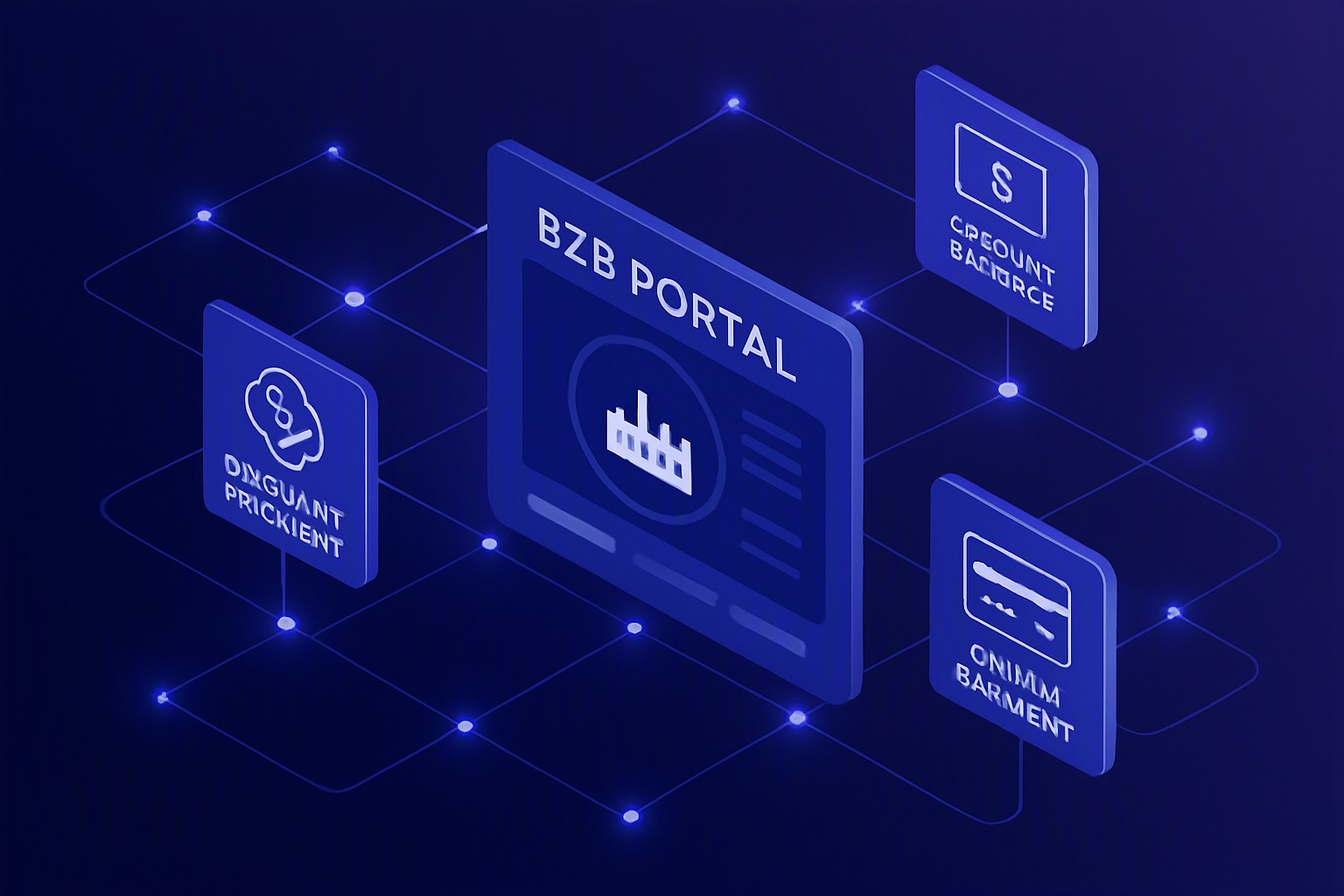
For manufacturers, distributors, and wholesalers, the sales network is the engine of revenue — but the way most companies manage that network has barely changed in twenty years. Orders still arrive by phone calls, WhatsApp messages, and PDF attachments; pricing is negotiated manually; and collections depend on back-and-forth emails and bank transfer confirmations. The result is a sales operation that works hard but grows slowly.
A web-based B2B portal — often called a dealer management system or B2B ordering platform — replaces this fragmented workflow with a single, always-on digital channel where your dealers and wholesale customers can browse products, see their own pricing, place orders, and manage payments. In this article, we'll break down why traditional order collection is holding your business back, what a modern B2B platform actually delivers, and how it translates into measurable revenue growth.
Taking orders by phone and email feels free, but it is one of the most expensive processes in a B2B company. Consider what actually happens between a dealer deciding to order and the goods leaving your warehouse:
The strategic problem is simple: your capacity to take orders is capped by the number of people answering phones. A B2B portal removes that ceiling.
Not all e-commerce solutions fit B2B realities. Wholesale relationships are built on negotiated terms, credit limits, and volume pricing — and a purpose-built B2B platform reflects exactly that. Here are the capabilities that matter most:
Every dealer sees their own negotiated pricing the moment they log in. Tiered discounts, volume-based breaks, customer-group pricing, and campaign prices are applied automatically — no manual quoting, no inconsistent pricing across your sales team, and no risk of a dealer screenshotting another dealer's price list.
Dealers can view their outstanding balance, open invoices, payment history, and available credit limit at any time. This transparency alone eliminates a huge share of routine phone traffic and dramatically shortens payment cycles, because customers always know exactly what they owe.
Integrated virtual POS lets dealers pay invoices or prepay orders by credit card directly inside the portal. Instead of waiting for bank transfers and matching EFT receipts, cash flows in automatically — often reducing your average collection period by days or even weeks.
Stock levels, order history, quick reorder from previous purchases, order tracking, and delivery status are all available around the clock. Your best customers can reorder in three clicks without speaking to anyone.
A serious B2B portal synchronizes products, stock, pricing, and invoices with your existing ERP or accounting software in real time, so there is no double data entry and no reconciliation headaches.
| Criteria | Phone / Email / WhatsApp Ordering | Web-Based B2B Portal |
|---|---|---|
| Ordering hours | Business hours only | 24/7, including weekends |
| Order errors | High (manual re-entry at each step) | Minimal (customer enters data once) |
| Pricing | Quoted manually, often inconsistent | Automatic, dealer-specific, always current |
| Balance & invoice inquiries | Phone calls to accounting | Self-service, real-time |
| Collections | Manual follow-up, bank transfers | Virtual POS, instant online payment |
| Sales team workload | Heavy administrative burden | Focused on growth and relationships |
| Scalability | Limited by headcount | Unlimited — new dealers onboard digitally |
| Data and reporting | Scattered across inboxes | Centralized: order trends, dealer activity, sales analytics |
The business impact of a well-implemented dealer portal shows up in three concrete areas:
1. More orders, larger baskets. When ordering takes three minutes instead of three phone calls, order frequency rises. Built-in features — related product suggestions, campaign banners on the portal home page, and minimum-cart nudges — systematically increase average order value. Dealers who can see stock in real time also tend to consolidate purchases with you rather than splitting them across suppliers.
2. Faster cash conversion. Online payment options and transparent balances shorten the gap between invoicing and payment. For a wholesale business, cutting even one week from the average collection period meaningfully improves working capital — often worth more than the platform itself within the first year.
3. Leaner operations. Order entry, price management, balance inquiries, and payment tracking shift from your staff to the system. Most companies report that routine order-related calls and emails drop by well over half, freeing the sales team to open new territories and reactivate dormant accounts — the activities that actually grow a dealer network.
There is also a competitive dimension: distributors who offer a smooth digital ordering experience simply retain dealers better. Once your customers are used to ordering from you in three clicks, switching to a competitor's phone-and-fax workflow feels like a step backward.
Before investing, evaluate potential solutions against a practical checklist:
Implementation best practice: start with your top 20% of dealers, migrate their pricing and balances carefully, gather feedback in the first month, then roll out to the full network. Early adopters typically become your internal advocates.
Your dealers don't want more phone calls — they want faster answers, clearer pricing, and easier ordering. A custom web-based B2B portal gives them exactly that, while giving you faster collections, lower operational costs, and a sales network that scales without scaling your headcount.
Let's plan your custom B2B platform together — one that will modernize your dealer network, accelerate your collections, and turn your ordering process into a competitive advantage.

Effective Software Testing Strategies for Modern Development In the rapidly evolving landscape of te...
Devamını oku →
Furniture Production process is a complex and detailed process, especially in medium and large scale...
Devamını oku →
Using @once Directive in Laravel Blade Components for Vue.js Single File Component-like UsageIntrodu...
Devamını oku →