

When a build fails at two in the morning, the first thing a developer reads is rarely the stack trace — it is the test title. A well-chosen test title acts as a signpost, instantly telling the reader what broke, under which conditions, and what the expected behavior should have been. A poorly chosen one, on the other hand, turns debugging into archaeology. Despite this, test naming is one of the most neglected skills in modern software development. This guide explains what a test title really is, why it matters more than most teams realize, and how to write names that keep your test suite readable for years.
A test title (also called a test name or test description) is the human-readable label attached to an automated test case. Depending on your stack, it may be defined with it() or test() in Jest and Vitest, def test_... in pytest, [Fact] or [Theory] in xUnit, or @Test methods in JUnit 5. Whatever the syntax, the title ends up in far more places than developers expect:
Because a test title travels through all of these channels, it functions as living documentation. Product managers, QA engineers, and future maintainers — including your future self — will rely on it to understand what the system is supposed to do. Research and industry surveys on developer productivity consistently point to the same insight: engineers spend more time reading code than writing it, and tests are read far more often than they are run.
Over the years, several naming styles have become established across different languages and frameworks. None is universally "correct," but each carries trade-offs in readability, tooling support, and team consistency.
methodName_condition_expectedResult — compact and popular in statically typed languages such as Java and C#.should_return_false_when_age_is_under_18 — reads like a sentence and works well with behavior-driven development.describe() and it() calls so the titles compose into a readable specification.The table below compares the most common conventions:
| Convention | Example | Best For | Main Drawback |
|---|---|---|---|
| Method state expectation | withdraw_InsufficientBalance_ThrowsException | Unit tests in Java/C# codebases | Underscore-heavy, harder to read aloud |
| Should-when | should throw an exception when balance is insufficient | Behavior-focused teams, JavaScript projects | Titles can grow long quickly |
| Given-when-then | Given a balance of $50, when withdrawing $100, then an error is raised | BDD, acceptance and integration tests | Verbose; overkill for simple unit tests |
| Nested describe blocks | describe('withdraw') → it('rejects insufficient balance') | Frontend suites with Jest, Vitest, Playwright | Requires tooling that renders hierarchy clearly |
Whichever convention you choose, the decisive factor is consistency. A codebase that mixes four styles is harder to scan than a codebase that uses one imperfect style everywhere.
Strong test titles share a handful of qualities, regardless of language or framework. Treat the following as a practical checklist:
rejects expired tokens survives a refactor; calls JWT library validate method does not.A useful mental exercise: read the title aloud to a colleague. If they can describe what the test verifies, when it fails, and why it matters — without seeing the code — the title is doing its job.
Even experienced teams fall into predictable traps with test naming. The most damaging ones include:
test1, works, or myFunction test convey zero information and clutter CI logs.Avoiding these mistakes requires no new tooling — only a shared standard and a few minutes of attention per pull request.
The value of clear test titles compounds once your pipeline grows. Modern continuous integration systems aggregate thousands of test results into reports, dashboards, and notifications. In that environment, the title is the primary key by which humans navigate automated feedback.
Well-named tests make flaky-test detection actionable, because a failure report reading checkout should block orders above available credit — failed on retry tells an on-call engineer exactly where to look. They improve release confidence, since reviewers can scan a pull request's check summary and understand coverage without opening files. And they shorten onboarding, because newcomers can read the test suite like a specification of system behavior.
In short, test titles are a low-cost, high-leverage investment. They require no framework migration, no extra dependencies, and no architectural change — only the discipline to name things as if the next reader's time matters. In software teams, it always does.

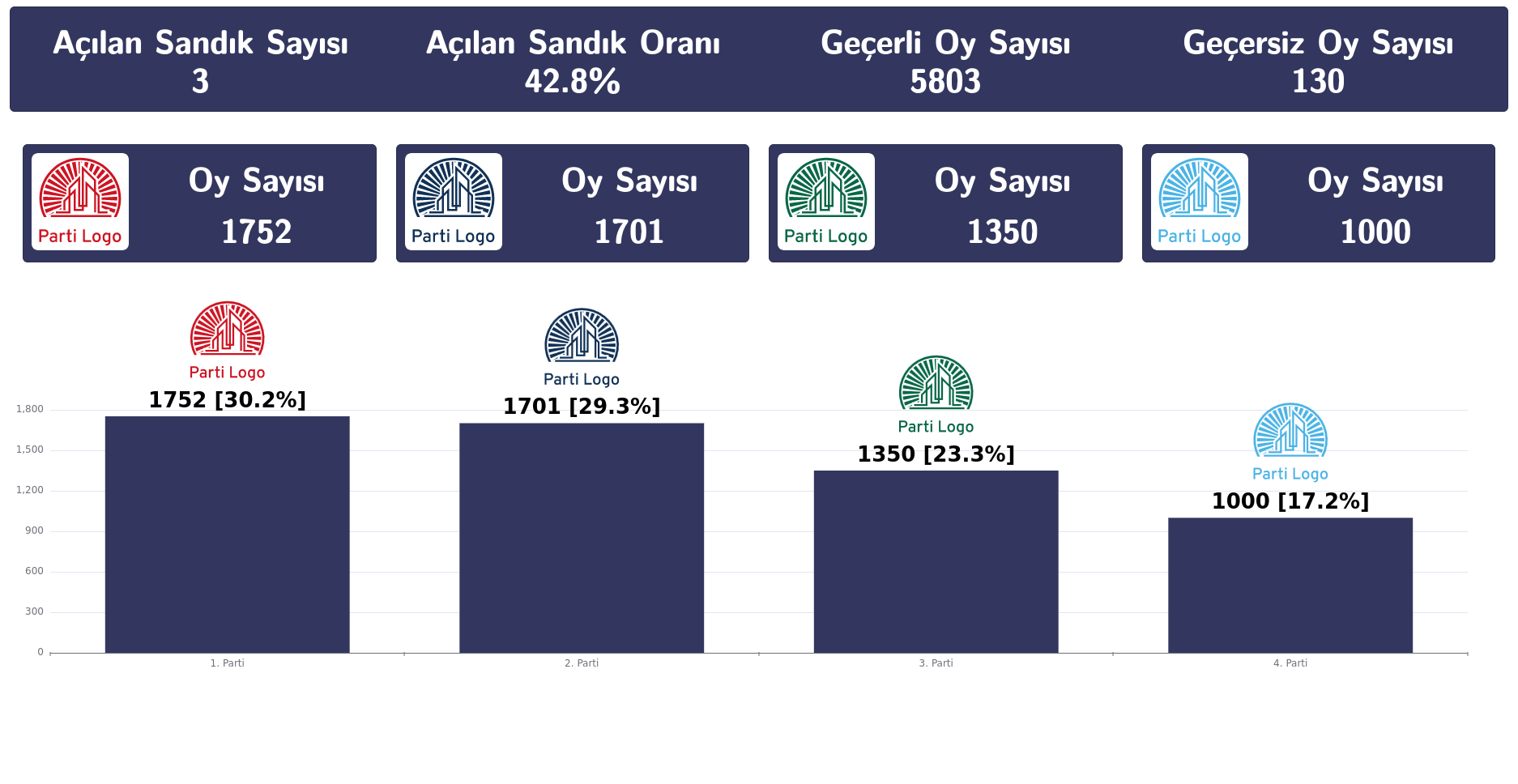
31 Mart 2024 tarihinde yapılacak olan yerel seçimlere, seçim yazılımımızla biz de hazırız.Seçi...
Devamını oku →