
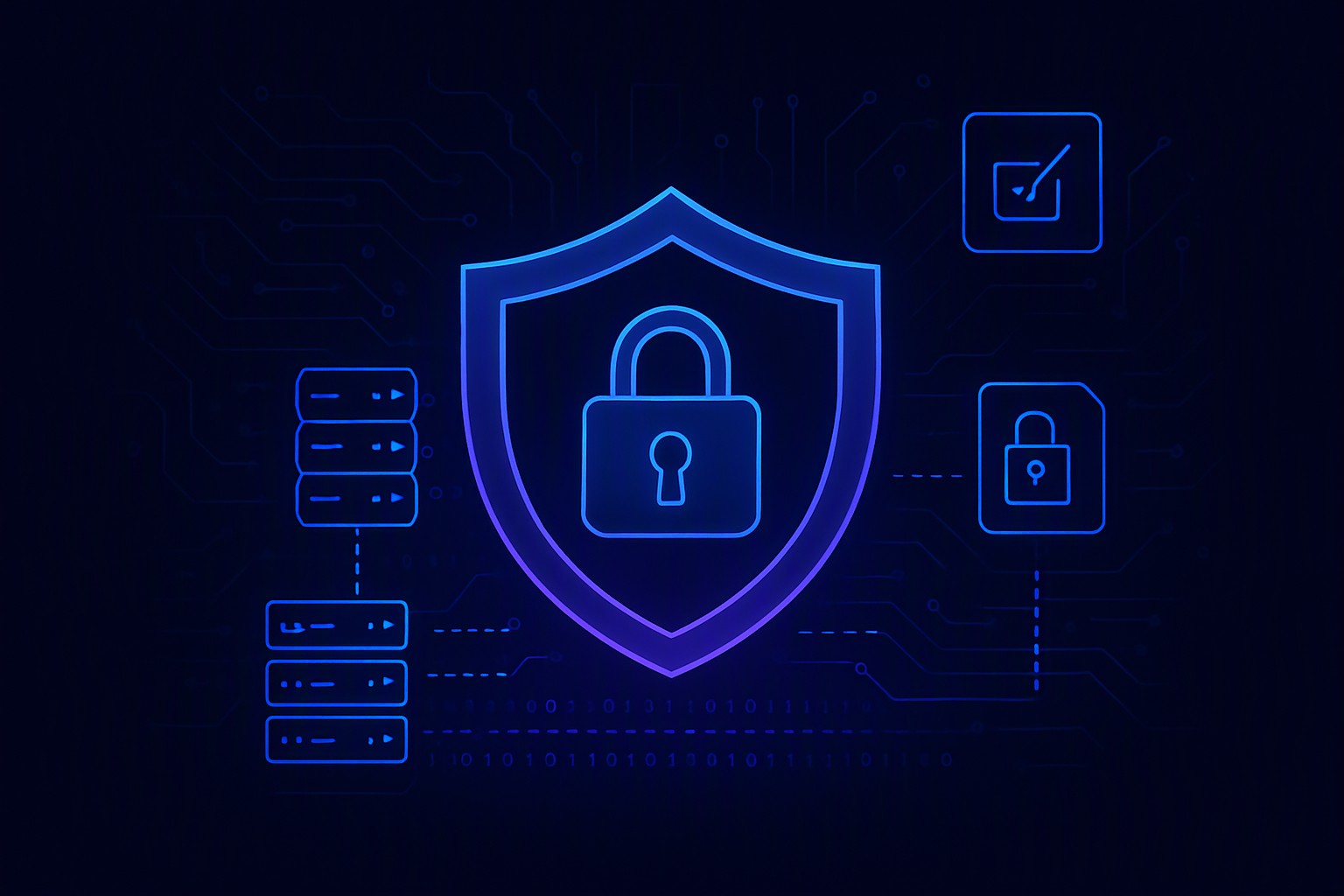
For today's enterprises, software is no longer just a tool — it is the primary custodian of customer data, trade secrets, and operational continuity. Yet many organizations still treat security as a final checklist item rather than a foundational design principle. With regulators in Turkey (KVKK) and the European Union (GDPR) imposing unprecedented penalties, and cyberattacks growing in both frequency and sophistication, compliant and secure software development has become a strategic imperative — not an IT detail. This article examines the real cost of data breaches, the "Security by Design" philosophy, and the specific technical capabilities your software must have to remain compliant.
The consequences of a data breach extend far beyond a temporary IT outage. They typically unfold across three dimensions — and each one lands directly on the desk of executive leadership.
Legal and regulatory consequences:
Financial consequences:
Reputational consequences:
The pattern across these dimensions is consistent: breaches are rarely caused by sophisticated zero-day attacks alone. The majority exploit known, unpatched vulnerabilities or weak access controls — in other words, failures of process and design.
Security by Design is an engineering philosophy in which security and privacy controls are embedded into the software from the very first architectural decision — not retrofitted after development. It is closely related to DevSecOps, where security verification is automated throughout the development lifecycle ("shift-left" testing) rather than performed as a final gate.
Notably, this is no longer merely best practice. GDPR Article 25 explicitly requires "data protection by design and by default," meaning systems must be built so that only personal data necessary for each specific purpose is processed. KVKK's data security obligations under Article 12 point in the same direction.
The difference between the two approaches is stark:
| Criterion | Reactive ("Bolt-On") Security | Security by Design |
|---|---|---|
| When security is addressed | After development, often after an incident | From architecture and requirements onward |
| Cost of fixing a flaw | High — rework, downtime, redesign | Low — corrected during design and coding |
| Regulatory audit readiness | Fragile; gaps surface under scrutiny | Documented, verifiable, audit-friendly |
| Breach likelihood | Elevated; unknown gaps accumulate | Reduced through layered controls |
| Business agility | Compliance blocks releases | Compliance built into delivery speed |
Core principles of the approach include least privilege, defense in depth, zero-trust access, secure coding standards, and continuous threat modeling. The outcome is software whose compliance posture can be demonstrated to auditors and clients — not merely asserted.
Whether you are auditing a legacy application or commissioning new software, four technical capabilities are non-negotiable for KVKK and GDPR alignment:
Compliance is a continuous discipline, not a one-time certification. For executive and compliance teams, a realistic sequence looks like this:
Organizations that complete this journey consistently report an unexpected benefit: security maturity becomes a commercial asset in tenders, enterprise procurement processes, and international expansion.
Data protection law has permanently changed the economics of software. The question facing leadership is no longer whether to invest in secure, compliant software, but when — before a breach forces the issue at a far higher price. The most cost-effective moment to act is before an incident, beginning with clarity about where your current vulnerabilities actually are.
If you want to identify and close security gaps in your existing software — or build a secure, KVKK/GDPR-compliant infrastructure from the ground up — request a professional security audit today. A structured assessment is the fastest way to turn regulatory risk into demonstrated, auditable trust.


How to Choose the Right Software Development Team for Your Business: A Comprehensive Guide In today...
Devamını oku →
Why E-Commerce and ERP Integration Is Essential: End Stock and Order Chaos Selling across multiple c...
Devamını oku →