
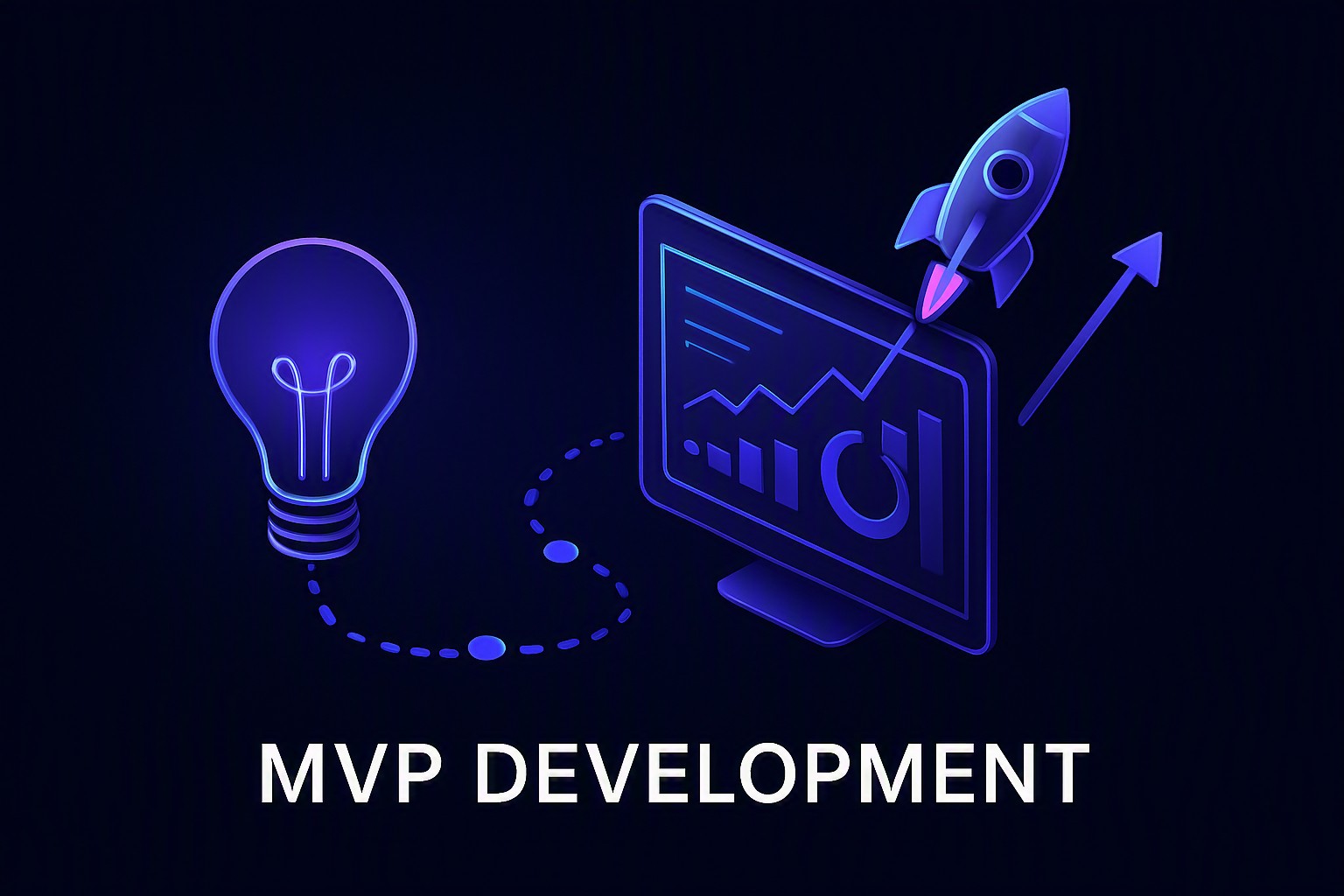
Every year, thousands of brilliant software ideas die before they ever reach a user — not because they were bad ideas, but because their founders spent twelve months and their entire runway building the "perfect" product nobody had validated. The startup graveyard is full of polished, feature-rich applications that solved a problem nobody had. The antidote to this fate is the Minimum Viable Product (MVP): a strategic approach that lets you test your riskiest assumptions with real users, on a real budget, before you commit serious capital.
In this guide, we'll break down exactly what an MVP is (and isn't), how to define your core features, how to iterate based on feedback, and how to scale from a lean first release to a full-scale product.
The most damaging misconception in early-stage product development is confusing "minimum" with "incomplete." An MVP is not a half-finished product thrown together in a weekend. It is the smallest version of your product that delivers your core value proposition to a real user, end to end.
Think of it this way: if your vision is an autonomous electric vehicle, an MVP isn't a car with three wheels and no engine. It's a skateboard. Then a scooter. Then a bicycle. Each version fully solves the underlying problem — getting from point A to point B — while validating demand before you invest in engine technology.
An MVP is:
An MVP is not:
Investors increasingly distinguish between these two. A focused MVP with 100 engaged users tells a far stronger story than a bloated application with zero traction.
The fastest way to burn through a development budget is feature creep — the gradual accumulation of "nice-to-haves" that double your timeline and dilute your value proposition. Disciplined feature selection is where successful MVPs are won or lost.
Use this prioritization framework:
A practical budget discipline: allocate roughly 70% of your MVP budget to the core experience, 20% to essential infrastructure (authentication, payments, security), and hold 10% in reserve for post-launch fixes and surprises. Founders who plan for zero contingencies inevitably compromise quality at the worst possible moment.
MVP vs. Full Product — A Quick Comparison
| Aspect | MVP | Full Product |
|---|---|---|
| Primary goal | Validate demand and core value | Scale growth and retention |
| Feature scope | Single core workflow | Complete feature ecosystem |
| Timeline | 6–12 weeks (typical) | 6–18 months |
| Budget profile | Fraction of total product cost | Significant multi-phase investment |
| Design focus | Friction-free core journey | Polished, comprehensive UX |
| User base | Early adopters | Mass market |
| Success metric | Engagement & validated learning | Revenue, retention & market share |
Shipping your MVP isn't the finish line — it's the starting gun. The real value of an MVP lies in the Build → Measure → Learn loop, popularized by Eric Ries and the Lean Startup methodology. Each cycle turns raw user behavior into product decisions.
Here's how to run it effectively:
A well-known pattern: Airbnb's founders famously started by photographing and listing their own apartment. That scrappy, manual "MVP" validated the core demand — people will pay to stay in a stranger's home — before a single line of scalable code was written. Sometimes the leanest MVP isn't even software.
Once your MVP demonstrates validated learning — consistent engagement, early retention, and ideally early revenue — the transition to a full-scale product must be deliberate. Scaling prematurely is as dangerous as never scaling at all.
Your transition roadmap should include:
For corporate innovation teams, the same logic applies: an MVP lets you validate an internal product idea with a pilot department before requesting enterprise-wide budget approval.
The gap between a great idea and a great company is bridged by validated learning — and the MVP is the most cost-effective vehicle for that journey. By focusing on one core value, protecting your budget from feature creep, listening obsessively to early users, and scaling only when the data supports it, you dramatically improve both your product's odds and your startup's survival rate.
Ready to turn your software idea into a market-ready MVP quickly and with an optimized budget? Leverage our MVP consulting services — from feature prioritization and technical architecture to launch and iteration — and bring your vision to users without wasting your runway.

How to Extract Data from Websites Introduction Accessing and extract...
Devamını oku →
Cloudflare Kullanan Sitelerde Safari Tarayıcısında Video Oynatma Sorununu Çözmek...
Devamını oku →
Why E-Commerce and ERP Integration Is Essential: End Stock and Order Chaos Selling across multiple c...
Devamını oku →